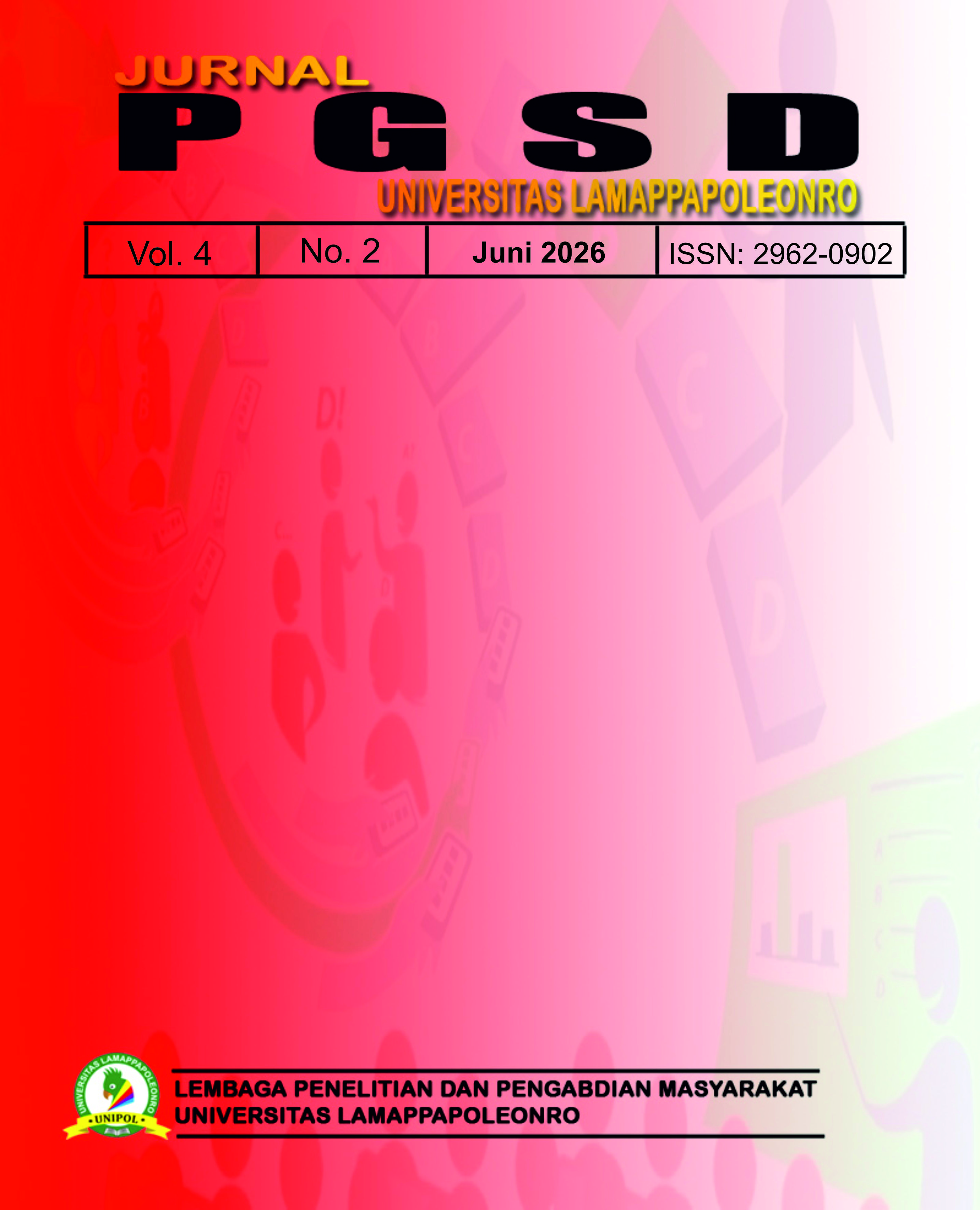
Literasi Digital Islami sebagai Upaya Pencegahan Penyebaran Hoaks Keagamaan di Kalangan Mahasiswa
DOI:
https://doi.org/10.57093/jpgsdunipol.v4i2.89Keywords:
Islamic Digital Literacy, Religious Misinformation, Fact Checking, College StudentsAbstract
Advances in digital technology have made it easier for the public to access and disseminate information, including religious information. However, this ease of access has also been accompanied by an increase in the spread of religious misinformation, which has the potential to cause misunderstandings, social conflict, and distortions in religious understanding. As a group that actively uses digital media, students face a relatively high risk of being exposed to unverified information. Therefore, Islamic digital literacy is a crucial effort in preventing the spread of religious hoaxes among students. This study aims to analyze students’ level of understanding of Islamic digital literacy, identify common forms of religious hoaxes, examine the role of Islamic digital literacy in preventing the spread of religious hoaxes, and identify factors that support and hinder its implementation. This study employs a descriptive qualitative approach using data collection techniques such as in-depth interviews, observation, and documentation. Research informants were selected through purposive sampling, specifically students who actively use digital media and social media as sources of religious information. Data were analyzed using the Miles, Huberman, and Saldaña model through the stages of data reduction, data presentation, and drawing conclusions. The results of the study indicate that Islamic digital literacy plays a significant role in shaping attitudes toward.
References
Arifin, M., Suryadi, A., & Hidayah, N. (2023). Media literacy and hoax prevention among university students in Indonesia. Jurnal Komunikasi Pendidikan, 7(2), 145–158.
Ferrari, A. (2022). Digital competence in practice: An analysis of frameworks and models. European Commission Publications.
Fuchs, C. (2023). Social media: A critical introduction (4th ed.). Sage Publications.
Guess, A. M., Nagler, J., & Tucker, J. A. (2020). Less than you think: Prevalence and predictors of fake news dissemination on Facebook. Science Advances, 5(1), eaau4586. https://doi.org/10.1126/sciadv.aau4586
Hakim, L., & Aziz, M. (2022). Islamic digital literacy and ethical communication in social media. Jurnal Dakwah dan Komunikasi Islam, 8(1), 34–49.
Kemendikbudristek. (2022). Panduan Implementasi Kurikulum Merdeka. Jakarta: Kementerian Pendidikan, Kebudayaan, Riset, dan Teknologi.
Howard, P. N. (2022). Lie machines: How to save democracy from troll armies, deceitful robots, junk news operations, and political operatives. Yale University Press.
Kementerian Komunikasi dan Digital Republik Indonesia. (2024). Laporan tahunan penanganan hoaks dan disinformasi digital di Indonesia 2024. Kementerian Komunikasi dan Digital RI.
Kurnia, N., Astuti, S. I., & Rachman, B. A. (2021). Digital literacy and information verification behavior among university students. Jurnal Ilmu Komunikasi, 19(3), 215–229.
ivingstone, S., & Third, A. (2024). Children and young people’s digital participation: Critical literacy in the information age. New Media & Society, 26(1), 112–129. https://doi.org/10.1177/14614448231124567
Ng, W. (2021). New digital technology in education: Conceptualizing professional learning for educators. Springer.
Pratama, R., & Nugroho, A. (2023). Students’ digital literacy competence in identifying misinformation on social media. International Journal of Educational Research Review, 8(4), 567–578.
Putri, S., & Hidayat, T. (2022). Media literacy education as a strategy to combat misinformation among youth. Jurnal Pendidikan dan Kebudayaan, 12(2), 89–101.
Rahman, A. (2023). Tabayyun as an Islamic approach to information verification in the digital era. Al-Ulum: Jurnal Studi Islam, 23(1), 67–81.
Setiawan, D., Prakoso, H., & Wulandari, E. (2024). Digital media use and critical information evaluation among Indonesian university students. Journal of Digital Society Studies, 5(1), 21–35.
Sulaiman, M., & Ismail, N. (2021). Islamic ethics and responsible social media engagement among Muslim youth. Journal of Islamic Communication, 4(2), 78–92.
UNESCO. (2023). Media and information literacy: Facts and figures. UNESCO. https://www.unesco.org/en/media-information-literacy
We Are Social. (2025). Digital 2025: Global overview report. We Are Social & Meltwater. https://wearesocial.com/id/blog/2025/02/digital-2025/
Yusuf, M., Abdullah, R., & Karim, S. (2024). Strengthening Islamic digital literacy in higher education: Challenges and opportunities. Journal of Islamic Education Research, 9(1), 45–60.
Downloads
Published
Issue
Section
License
CC Attribution 4.0